
For a small business, getting noticed online can be challenging. Larger companies often have bigger advertising budgets, dedicated marketing teams, and years of brand recognition. However, having a smaller budget does not mean a business cannot build a strong online presence. With the right approach to content, small businesses can attract relevant audiences, build trust, and create long term visibility.
This is where content marketing India becomes particularly useful. Instead of depending entirely on paid advertising, businesses can use valuable and relevant content to answer customer questions, demonstrate expertise, explain their products or services, and stay connected with their audience.
A well planned content marketing strategy can help a small business turn its website, social media platforms, and other digital channels into valuable sources of information for potential customers.
What Is Content Marketing?
Content marketing involves creating and sharing useful, relevant, and consistent content to attract and engage a specific audience. The objective is not simply to promote a product or service in every piece of content. Instead, the focus is on providing information that helps potential customers understand a problem, explore solutions, and eventually make an informed purchase decision.
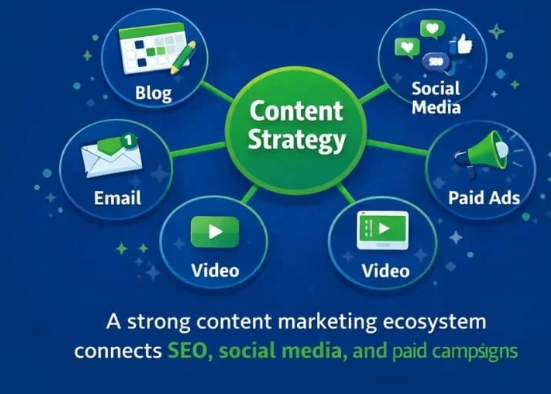
Content can take many forms, including blog articles, website pages, social media posts, videos, guides, case studies, newsletters, infographics, and frequently asked questions.
For example, a local interior design company could publish an article about choosing furniture for a small apartment. A dental clinic could create educational content about maintaining oral hygiene. A financial consultant could publish simple explanations of common investment concepts.
Each piece of content can help answer a question that potential customers may already be searching for online.
Why Content Marketing Matters for Small Businesses
Small businesses often need to make every marketing investment count. Content can continue attracting visitors after it has been published, especially when it answers useful search queries and remains relevant over time.
A strong content marketing strategy can help businesses in several ways.
Build Brand Awareness
Regularly publishing useful content can help people become familiar with a business. When potential customers repeatedly encounter helpful information from the same brand, they may begin to associate that brand with knowledge and expertise in its field.
Establish Trust
Customers want to know whether a business understands their needs before they spend money. Educational articles, guides, customer stories, and informative social media content can demonstrate knowledge and answer common concerns.
Support Search Visibility
Search engines rely heavily on useful and relevant information when determining which pages to show users. Creating content around questions and topics that matter to the target audience can help a website attract organic traffic.
Generate Leads
Content can introduce potential customers to a business at different stages of their buying journey. Someone searching for general information may discover a blog, while someone comparing services may read a detailed guide or case study before contacting the company.
Reduce Dependence on Paid Advertising
Paid advertising can deliver quick visibility, but businesses generally need to keep investing to maintain that visibility. Useful organic content can continue attracting visitors over a longer period, making it an important part of a broader digital marketing strategy.
Understand Your Target Audience First
Before creating content, a small business needs to understand who it is trying to reach.
Ask questions such as:
- Who are your ideal customers?
- What problems do they want to solve?
- What questions do they frequently ask?
- What factors influence their purchasing decisions?
- What concerns prevent them from buying?
- Which platforms do they use?
- What type of information do they find useful?
For a local business, location can also be important. A business serving customers in Mumbai, for example, can create content addressing local preferences, customer concerns, and location specific search queries.
Audience research gives businesses a foundation for deciding what topics to create and where to publish them.
Create a Clear Content Marketing Strategy
Creating random posts whenever there is time is unlikely to produce consistent results. A content marketing strategy provides structure and helps businesses stay focused.
Start by defining the main objective. A business may want to increase website traffic, generate leads, improve brand awareness, educate customers, or support sales.
Once the objective is clear, identify the content topics that connect the business with its audience.
For example, a skincare clinic could create content around skincare routines, common skin concerns, treatment explanations, and preparation guidelines. A home furnishing business could discuss bedsheet materials, room styling, furniture selection, and home care.
The content should connect the audience’s interests with the products or services offered by the business.
Use Different Types of Business Content
Creating different formats can keep an audience engaged and allow businesses to reach people across multiple platforms.
Blog Content
Blogs can answer detailed customer questions and target relevant search terms. They can also demonstrate expertise and direct readers towards relevant products or services.
A good blog should provide genuine information rather than simply repeating keywords. It should have a clear structure, useful headings, practical examples, and answers to common questions.
Social Media Content
Social media allows small businesses to communicate directly with their audience. Businesses can share educational posts, customer experiences, behind the scenes content, product information, tips, and industry insights.
The goal should not be to make every post promotional. A healthy content mix can include educational and engaging information alongside product or service related posts.
Video Content
Video can make complicated subjects easier to understand. Short educational videos, demonstrations, tutorials, customer stories, and expert explanations can work well for businesses across different industries.
Small businesses do not necessarily need expensive production equipment. Clear information, good presentation, and consistency can be more important than elaborate production.
Case Studies
Case studies show how a business helped a customer solve a particular problem. They can provide practical evidence of the company’s experience and help potential customers understand what they can expect.
Frequently Asked Questions
FAQ content can address the questions customers ask before making a purchase. It can also make website content more useful and help potential customers find important information quickly.
Focus on Local Content
For businesses serving specific cities or regions, local content can be especially valuable.
A restaurant could create content about local food preferences. A healthcare practice could explain commonly searched services in its area. A marketing agency could discuss digital trends affecting businesses in a particular city.
Localised business content can make a brand more relevant to its intended audience.
Businesses should also ensure that their website and local business profiles contain accurate information, including contact details, service information, operating hours, and location details.
Use SEO Without Making Content Difficult to Read
Search engine optimisation and content marketing work well together when used naturally.
Start by identifying the phrases customers actually use when searching for information. These can include questions, service related searches, product terms, and location based searches.
Instead of forcing keywords into every paragraph, create useful content around the topic. Search engines are increasingly capable of understanding context, meaning, and related concepts.
For example, a business targeting content marketing India should not repeat the exact phrase unnecessarily. Instead, it can discuss content planning for Indian businesses, audience behaviour, local search visibility, digital channels, and practical marketing approaches.
The result should feel like content written for people first.
Build Content Around the Customer Journey
Not every potential customer is ready to purchase immediately. Content should therefore address different stages of the customer journey.
Awareness Stage
At this stage, customers are identifying a problem or learning about a topic.
Educational blog posts, introductory videos, guides, and informative social media posts can help.
Consideration Stage
Customers at this stage are comparing solutions and researching providers.
Detailed service pages, comparison articles, case studies, demonstrations, and expert guides can be useful.
Decision Stage
Customers who are ready to take action may need information that reduces uncertainty.
Testimonials, pricing information, FAQs, service details, consultations, and clear calls to action can help them move forward.
A well structured content plan should include material for all these stages.
Maintain Consistency
Consistency is more important than publishing a large amount of content for a short period and then stopping.
A small business can begin with a manageable schedule. For example, it might publish two detailed blog posts each month and maintain regular social media activity.
The frequency can increase as the business develops more resources.
The key is to establish a realistic publishing schedule that the team can maintain.
Repurpose Existing Content
Creating every piece of content from scratch can take considerable time. Repurposing can make the process more efficient.
A detailed blog can become several social media posts. A frequently asked question can become a short video. A customer case study can become an infographic. Several related blogs can eventually be combined into a comprehensive guide.
This approach allows businesses to get more value from existing business content while maintaining consistency across platforms.
Measure Content Performance
Publishing content is only one part of the process. Businesses should also monitor how their content performs.
Useful metrics can include:
- Website traffic
- Search impressions
- Search clicks
- Time spent on important pages
- Social media engagement
- Leads generated
- Contact form submissions
- Conversion rates
- Returning website visitors
Not every piece of content will generate immediate leads. Some articles may primarily build awareness or attract organic traffic, while others may directly support conversions.
Regular performance analysis helps businesses identify what their audience responds to and where improvements are needed.
Common Content Marketing Mistakes Small Businesses Should Avoid
A few common mistakes can reduce the effectiveness of a content campaign.
Creating Content Without a Goal
Every major piece of content should have a purpose. Without clear objectives, businesses may spend time creating content that does not contribute to their marketing goals.
Making Every Post Promotional
Customers do not want advertisements every time they interact with a brand. Educational and useful content can make promotional messages more effective when they are eventually presented.
Ignoring Existing Customers
Content is not only for attracting new customers. Businesses can also create guides, updates, tutorials, and helpful resources for existing customers.
Focusing Only on Trends
Trends can provide opportunities, but businesses should also create evergreen content that remains useful for months or years.
Expecting Immediate Results
Content marketing generally requires patience. Search visibility, audience trust, and brand recognition develop over time. Businesses should evaluate performance over a reasonable period instead of abandoning the strategy after a few weeks.
How One Basket Marketing Can Help
Developing an effective content strategy requires more than simply writing articles or publishing social media posts. Businesses need to understand their audience, identify relevant topics, create useful content, optimise it for search, distribute it across suitable channels, and measure the results.
One Basket Marketing can help businesses approach content as part of a broader digital marketing strategy. By combining audience research, SEO principles, content planning, and digital marketing expertise, businesses can create content that supports both visibility and business objectives.
For small businesses, the focus should be on creating useful information consistently rather than trying to compete with larger brands on content volume alone.
Frequently Asked Questions
What is content marketing for small businesses?
Content marketing involves creating useful and relevant information that attracts a business’s target audience and helps build awareness, trust, engagement, and eventually conversions.
Why is content marketing important in India?
Content marketing India is useful because businesses across different industries can use educational and informative content to connect with local audiences, answer customer questions, improve online visibility, and support their marketing objectives.
How do I create a content marketing strategy?
Start by identifying your target audience and marketing objectives. Then research relevant topics, select suitable content formats, create a publishing schedule, optimise content for search, distribute it through appropriate channels, and measure performance.
What type of business content should a small business create?
A business can create blog articles, social media posts, videos, FAQs, guides, case studies, customer stories, tutorials, and educational resources depending on its audience and industry.
How long does content marketing take to show results?
The timeline can vary depending on factors such as competition, content quality, website authority, industry, distribution, and consistency. Some content can generate engagement quickly, while organic search visibility often takes longer to develop.
Is SEO necessary for content marketing?
SEO can help content reach people who are actively searching for relevant information. However, content should primarily be useful and easy to understand rather than being created solely to include keywords.
Conclusion
A strong content strategy can give small businesses a practical way to build their online presence, educate potential customers, and establish credibility without depending entirely on paid advertising.
The foundation of successful content marketing India is understanding the audience and consistently creating information that genuinely helps them. From blogs and videos to social media posts, FAQs, and case studies, every piece of content can contribute to a broader marketing objective.
A well planned content marketing strategy also allows businesses to build a library of useful resources that can continue supporting visibility and customer engagement over time.
For small businesses, the goal should not simply be to create more content. It should be to create the right business content, for the right audience, on the right platforms, with a clear purpose behind every piece.